Bodi Empowerment
Concussion //
Concussion Chiropractor Toronto:
Please follow and like us:


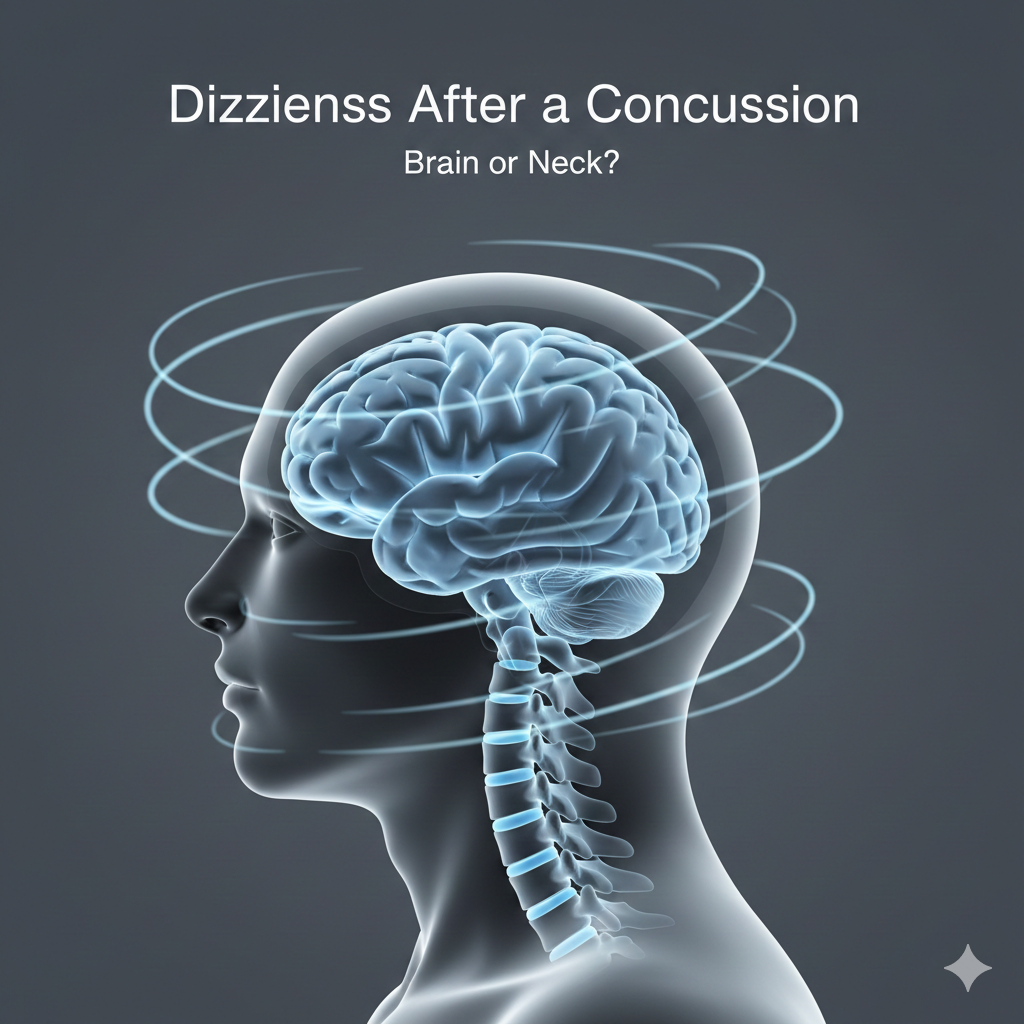
Why Dizziness After a Concussion May Come From Your Brain, Your Neck — or Both
Dizziness after a concussion is one of the most common and frustrating symptoms people experience. You stand up and feel unsteady. You turn your head and the room seems to lag. You’re told to “just rest,” yet weeks or months later the dizziness still hasn’t resolved.
If you’re dealing with persistent dizziness and searching for a concussion chiropractor in Toronto, here’s the question that often gets overlooked:
Is your dizziness coming from the brain, the neck, or both?
Understanding the true source is the key to effective recovery.
🧠 Why Post‑Concussion Dizziness Is So Common
A concussion often affects multiple systems at once, including:
- Brain processing and sensory integration
- The vestibular system (inner ear)
- The cervical spine and deep neck stabilizers
Many people don’t realize that the neck plays a major role in balance, eye control, and spatial awareness. When the neck is injured—especially in whiplash‑type impacts common in sports, falls, and car accidents—it can create dizziness that feels identical to brain‑based concussion symptoms.
This is why many patients in Toronto seek out a concussion‑trained chiropractor who understands the brain–neck connection.
🧠 Brain‑Based Dizziness After Concussion
When dizziness originates from the brain or vestibular system, symptoms often include:
- Sensitivity to light or motion
- Blurry vision when moving the head
- Difficulty tracking moving objects
- Nausea in busy environments
- Symptoms that worsen with visual or cognitive load
This type of dizziness is linked to disrupted communication between the eyes, inner ear, and brain.
🦴 Neck‑Based (Cervicogenic) Dizziness After Concussion
Cervicogenic dizziness occurs when injured neck joints or muscles send inaccurate position signals to the brain. The brain then struggles to match what the eyes see with what the neck is reporting.
Common signs include:
- Dizziness triggered by neck movement
- Neck stiffness or pain
- Headaches at the base of the skull
- Symptoms improving when the neck is supported
- Normal brain imaging despite ongoing dizziness
This pattern is especially common after:
- Whiplash injuries
- Sports collisions
- Falls
- Motor‑vehicle accidents
These cases often benefit from clinicians trained in cervical spine assessment, including concussion‑focused chiropractors in Toronto.
🖥️ Why MRI and CT Scans Often Miss the Cause
Imaging is excellent for ruling out serious structural issues, but it does not assess:
- Joint motion quality
- Muscle coordination
- Cervical proprioception
- Eye–head–neck integration
This is why many people are told, “Your scan is normal,” even though their symptoms are very real.
🔄 The Overlap: Brain + Neck Together
In many post‑concussion cases, dizziness is caused by both vestibular and cervical dysfunction. Treating only one system often leads to incomplete recovery.
- If you rehab the brain but ignore the neck, progress stalls.
- If you treat the neck but ignore eye–head coordination, symptoms linger.
A combined, systems‑based approach is essential — and it’s increasingly used by concussion‑trained chiropractors and rehab professionals across Toronto.
🧭 Simple Screening Clues (Not a Diagnosis)
These questions can help guide clinical reasoning:
- Does dizziness increase more with head movement or visual motion
- Does supporting the neck reduce symptoms
- Is there neck pain, stiffness, or reduced range of motion
- Do symptoms spike with eye‑based exercises
A full assessment by a trained professional is necessary, but these clues often reveal the missing piece.
🏋️ Common Exercises Used in Concussion Rehabilitation
1. Vestibulo‑Ocular Reflex (VOR) Training – Beginner Level
Purpose: Improve eye–head coordination
How it’s done:
- Sit or stand upright
- Focus on a single target at eye level
- Keep eyes locked on the target
- Slowly turn the head side to side
- Continue for 10–20 seconds
A mild, temporary increase in symptoms can be normal. Persistent worsening is not.
2. Gentle Cervical Proprioception Reset
Purpose: Improve neck position awareness
- Slow, controlled head movements within a pain‑free range
- Focus on accuracy and control rather than speed
These exercises are often paired with manual therapy, postural correction, and targeted cervical rehabilitation.
🌟 Why This Matters for Recovery — Especially in Toronto
Toronto sees a high volume of sports‑related concussions, motor‑vehicle injuries, and slip‑and‑fall accidents. Many people experience lingering dizziness because only one part of the system was treated.
The most successful concussion care recognizes that:
The brain, vestibular system, and neck operate as a single integrated unit.
This is the approach commonly used by concussion‑trained chiropractors and rehab teams in Toronto who work with persistent post‑concussion symptoms.
✅ The Takeaway
Dizziness after a concussion is not something to push through or ignore. It’s a signal. When properly assessed—brain, vestibular system, and neck together—recovery is often faster and more complete.
If your symptoms are lingering, the issue is rarely effort. It’s almost always strategy.
Please follow and like us:
Dr. Ken, has been recognized as the Best Toronto Chiropractor in 2024, 2023, and 2018, here in downtown Toronto. As a sports chiropractor, he excels in treating a wide range of conditions including concussions, temporomandibular joint disorders (TMJ), sports-related injuries, and spinal issues. Beyond his clinical skills, Dr. Ken is an accomplished athlete, having represented Ontario in the Canadian Judo Championships and completed the Toronto Marathon on two occasions. He employs the innovative C3 Program to provide targeted and effective care to his patients, ensuring a holistic approach to their well-being and athletic performance.