Bodi Empowerment
TMJ vs Trigeminal Neuralgia: A Commonly Confused Diagnosis
Please follow and like us:


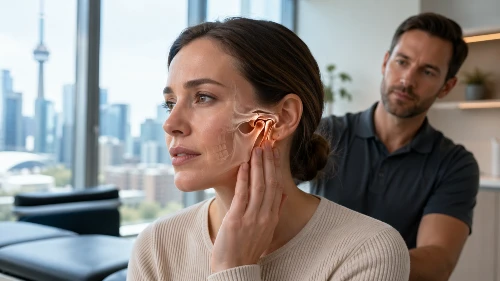
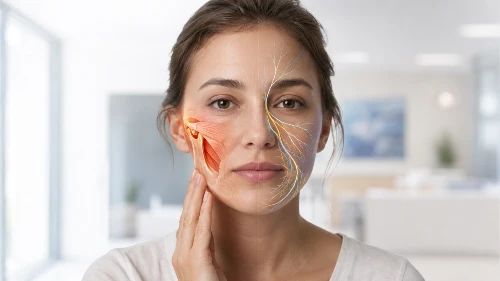
Jaw pain and face pain can feel almost identical from the inside, even though they come from two very different parts of the body. Two conditions get mixed up more than almost any others in this category: temporomandibular joint disorder, known as TMJ, and trigeminal neuralgia. Both cause pain around the jaw and face. Both can flare with chewing or talking. And both send frustrated patients from one specialist to another before they get an answer that actually fits.
As a chiropractor certified through the American Board of Chiropractic Sports Physicians and the team chiropractor for the Scarborough Shooting Stars, I see this confusion often in my downtown Toronto practice. Patients arrive after months of guessing, sometimes after a dentist has already adjusted their bite or a doctor has already tried medication for a nerve problem that was never really there. Getting the diagnosis right the first time saves people a lot of unnecessary treatment.
Why These Two Conditions Get Mixed Up

This is not the only diagnosis TMJ gets confused with. I have written before about the most common misdiagnoses of TMJ pain, and trigeminal neuralgia is one of the trickiest to sort out because the symptoms can genuinely look alike on the surface.
TMJ pain comes from the joint that connects your jawbone to your skull, along with the muscles and ligaments that move it. Trigeminal neuralgia comes from the trigeminal nerve, the main nerve that carries sensation from your face to your brain. One is a joint and muscle problem. The other is a nerve problem. But because they both live in the same neighborhood of the face and jaw, the symptoms can overlap just enough to confuse even experienced clinicians.
I had a patient last year who had already seen two dentists and a neurologist before she came to see me. She had been told her pain was probably trigeminal neuralgia because it was sharp and happened on one side of her face. But when I asked her to describe exactly when the pain hit, a pattern emerged that pointed somewhere else entirely.
How the Pain Actually Feels Different
This is where careful listening matters more than any scan. Trigeminal neuralgia tends to produce sudden, electric, stabbing pain that lasts seconds, often triggered by something light, like a breeze on the face, brushing your teeth, or even talking. Between attacks, most people feel completely fine.
TMJ pain behaves differently. It tends to be a dull, aching, or tight sensation that builds gradually and lingers. It gets worse with sustained jaw use, like chewing a tough meal or clenching during a stressful day. Many TMJ patients also notice clicking, popping, or a feeling of the jaw catching when they open their mouth wide. That mechanical symptom almost never shows up with a nerve condition.
My patient’s pain built slowly over the course of a meal and eased once she stopped chewing. That single detail was the clue that we were dealing with a joint and muscle issue rather than a nerve one.
What a Chiropractic Assessment Looks For
When someone comes to my clinic for TMJ treatment, I do not start with the assumption that it is TMJ. I start by ruling things out. I check the range of motion in the jaw, feel for muscle tension along the jaw and temples, and assess the neck, because the cervical spine and the jaw are more connected than most people realize. Tight or misaligned neck muscles can refer pain right into the jaw and face, mimicking a TMJ flare even when the joint itself is healthy.
I also ask specific questions about the pain itself. How long does it last. What triggers it. Does it follow a predictable pattern with eating or talking, or does it come out of nowhere. These answers tell me far more than an X-ray ever could, because trigeminal neuralgia and TMJ can look similar on imaging while feeling completely different in daily life.
When It Is Not TMJ at All
Honesty here matters more than almost anywhere else in my practice. If a patient’s pain pattern points toward trigeminal neuralgia, the right move is address the nerve not the TMJ joint. In my practice, that often means acupuncture rather than the manual joint work I use for TMJ. Acupuncture can calm an overactive trigeminal nerve and reduce the frequency and intensity of those sharp, electric flares in a way that jaw adjustments never will. For patients with more severe or treatment resistant cases, I also work alongside a medical doctors, since some presentations respond better to medication or a nerve focused procedure. The key is matching the treatment to the actual source of the pain rather than defaulting to the same approach for every patient who walks in with facial pain.
The same honesty applies in reverse. Plenty of patients get sent for neurology workups or nerve medication when what they actually have is a joint and muscle problem that responds well to hands on treatment, postural correction, and addressing tension in the neck and jaw muscles. Getting this distinction right the first time is the whole point of a proper assessment.
The Bottom Line
TMJ and trigeminal neuralgia share a zip code but very little else. One comes from a joint, the other from a nerve. One builds slowly with use, the other strikes suddenly and briefly. Knowing which one you are dealing with changes everything about how it should be treated, and a careful clinical history is usually enough to tell them apart before a single scan is ordered.
If your jaw or face pain has left you bouncing between providers without a clear answer, a focused assessment that looks at the joint, the muscles, and the neck together can often clear up the confusion in a single visit. You can book an assessment at the downtown Toronto clinic and get a clear answer instead of another guess.
Please follow and like us:


Dr. Ken, has been recognized as the Best Toronto Chiropractor in 2024, 2023, and 2018, here in downtown Toronto. As a sports chiropractor, he excels in treating a wide range of conditions including concussions, temporomandibular joint disorders (TMJ), sports-related injuries, and spinal issues. Beyond his clinical skills, Dr. Ken is an accomplished athlete, having represented Ontario in the Canadian Judo Championships and completed the Toronto Marathon on two occasions. He employs the innovative C3 Program to provide targeted and effective care to his patients, ensuring a holistic approach to their well-being and athletic performance.