
Bodi Empowerment
Post-Concussion Syndrome Treatment Toronto
Specialized concussion recovery care combining vestibular rehabilitation, cervical treatment & cognitive support. Dr. Ken Nakamura helps patients overcome persistent post-concussion symptoms.
Post-concussion syndrome (PCS) can be frustrating and disabling. If you've suffered a concussion, whether from sports injury, falls, motor vehicle accidents, or other trauma, and are still experiencing symptoms weeks or months later, you're dealing with PCS. Dr. Ken Nakamura specializes in evidence-based post-concussion treatment combining vestibular rehabilitation, cervical spine care, and cognitive support. With his expertise, most PCS patients achieve significant improvement and return to normal activities.
Quick Facts: Post-Concussion Syndrome
- Definition: Concussion symptoms persisting beyond typical 2 to 4 week recovery window
- Symptoms: Headaches, dizziness, cognitive problems, sleep disturbances, emotional changes
- Multi-System Involvement: Brain inflammation, vestibular dysfunction, cervical injury, autonomic dysregulation
- Treatment Duration: 6 to 12 weeks with comprehensive approach, 3 to 6 months for severe cases
What Is Post-Concussion Syndrome?
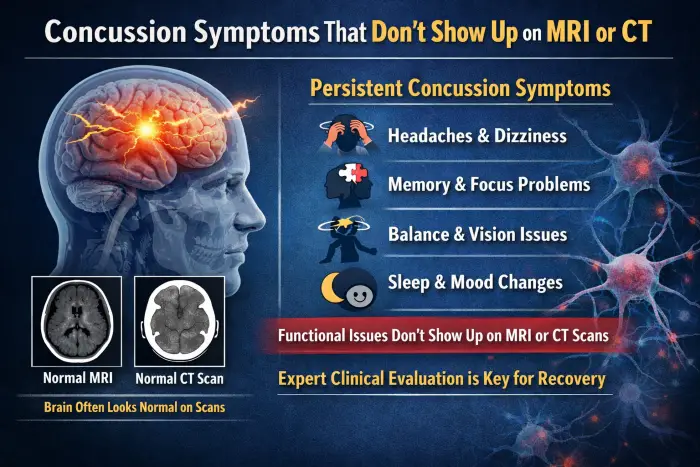
A concussion is a type of traumatic brain injury caused by a blow to the head, rapid acceleration-deceleration forces, or violent shaking. Concussions disrupt normal brain function through multiple mechanisms: direct impact causes axonal injury (damage to the brain's communication pathways), acceleration-deceleration forces stretch neural tissue, and the metabolic cascade triggered by brain injury creates a period of dysfunction even without visible structural damage on standard imaging. While many concussions resolve within 2 to 4 weeks, post-concussion syndrome occurs when symptoms persist beyond this typical recovery window. Some patients experience PCS symptoms for months or even years.
Post-concussion syndrome affects multiple body systems. It's not "all in your head," it's a real physiological condition with measurable changes in brain function, inner ear dysfunction, cervical spine injury, and autonomic nervous system dysregulation. Dr. Nakamura's comprehensive assessment identifies which systems are involved in your specific case, allowing targeted treatment that addresses all components rather than just brain-focused approaches that miss physical contributors. PCS involves:
- Brain inflammation and altered neural function
- Inner ear (vestibular) dysfunction
- Cervical spine and neck muscle injury
- Autonomic nervous system dysregulation
- Disrupted sleep-wake cycles
Understanding these multiple components is essential for effective treatment. Addressing only the brain while ignoring cervical and vestibular dysfunction results in incomplete recovery. This is why Dr. Nakamura's comprehensive approach works so well.
Post-Concussion Syndrome Symptoms
PCS symptoms vary among patients but commonly include:
Physical Symptoms
- Persistent headaches or migraines
- Dizziness or vertigo
- Balance problems and spatial disorientation
- Neck pain and stiffness
- Fatigue and low energy
- Sleep disturbances (insomnia or excessive sleeping)
- Sensitivity to light and noise
- Vision problems or difficulty focusing eyes
Cognitive Symptoms
- Brain fog and difficulty concentrating
- Memory problems, especially short-term memory
- Difficulty processing information
- Slow mental processing speed
- Difficulty multitasking
Emotional/Behavioral Symptoms
- Mood changes, irritability, or emotional lability
- Anxiety or depression
- Decreased frustration tolerance
- Social withdrawal
The constellation of symptoms, physical, cognitive, and emotional, is what makes PCS so debilitating. A comprehensive treatment approach addressing all components is essential. Many PCS patients report that standard medical care (rest, pain management, gradual return-to-activity) doesn't fully resolve their symptoms. This is because standard protocols don't address vestibular dysfunction, cervical injury, or autonomic nervous system dysregulation. Dr. Nakamura's multidisciplinary approach fills these gaps, producing recovery where conventional care fails.
Dr. Ken's Comprehensive Post-Concussion Assessment
Post-concussion syndrome requires skilled assessment to identify which body systems are involved. Dr. Nakamura's evaluation includes:
- Detailed Concussion History: Understanding the mechanism of injury and initial symptoms guides treatment planning.
- Vestibular Assessment: Specialized tests (Dix-Hallpike, head impulse test, balance testing) identify inner ear involvement.
- Cervical Spine Evaluation: Physical examination, range of motion testing, and palpation assess neck dysfunction.
- Neurological Screening: Assess for signs requiring additional medical referral.
- Balance and Proprioception Testing: Identify deficits affecting safety and quality of life.
- Functional Assessment: Evaluate ability to perform work, school, and daily activities.
This comprehensive assessment reveals the specific components of your PCS, which guides personalized treatment.
Post-concussion assessment identifies all affected systems for comprehensive recovery planning.
Still Suffering from Concussion Symptoms?
Don't live with persistent post-concussion symptoms. Get specialized assessment and comprehensive treatment from Dr. Ken Nakamura.
Bodi Empowerment · Push Pounds Sports Medicine · 55 University Ave, Mezzanine (2nd Floor), Downtown Toronto, M5J 2H7
Vestibular Rehabilitation for Dizziness and Balance
Concussions frequently damage the inner ear (vestibular system), causing dizziness, vertigo, and balance problems. Vestibular rehabilitation is specialized physical therapy that retrains your brain to process balance signals correctly. Dr. Nakamura's vestibular rehabilitation includes:
- Gaze Stabilization Exercises: Train your eyes to stay focused on objects while your head moves
- Balance Retraining: Progressive challenges to your balance system in safe, controlled ways
- Positional Exercises: Desensitize your vestibular system to movements that trigger symptoms
- Visual Pursuit Exercises: Improve how your brain processes moving visual targets
Most patients see significant improvement in dizziness and balance within 3 to 4 weeks of consistent vestibular rehabilitation.
Cervical Spine Treatment and Headache Relief
The neck and base of the skull are frequently injured during head trauma, even when the head impact is relatively mild. Cervical dysfunction contributes to:
- Post-concussion headaches (especially cervicogenic headaches)
- Neck pain and stiffness
- Dizziness and balance problems (through proprioceptive pathways)
- Brain fog and cognitive symptoms
Dr. Nakamura's cervical treatment combines:
- Gentle cervical mobilization to restore proper alignment
- Soft tissue therapy to release muscle tension
- Progressive neck stability exercises
- Proprioceptive retraining
- Postural correction and ergonomic guidance
By addressing cervical dysfunction, Dr. Nakamura often resolves associated headaches, dizziness, and even some cognitive symptoms.

Brain Fog and Cognitive Recovery
Brain fog, including difficulty concentrating, memory problems, and slow processing, is one of the most frustrating post-concussion symptoms. While Dr. Nakamura can't "fix" the brain directly, addressing physical components often improves cognition:
- Better vestibular function reduces dizziness that impairs concentration
- Improved cervical function reduces headaches that interfere with focus
- Enhanced sleep quality from treatment progression supports cognitive recovery
- Reduced pain and symptom burden allows mental resources for cognitive tasks
Additionally, Dr. Nakamura coordinates with medical providers, occupational therapists, and neuropsychologists when comprehensive cognitive rehabilitation is needed.
Return-to-Work and Return-to-Sport Protocols
Safe return to normal activities requires careful progression. Dr. Nakamura uses objective functional testing to guide decisions about return-to-work and return-to-sport, rather than arbitrary timelines. This includes:
- Symptom Monitoring: Tracking baseline symptoms and exacerbation patterns
- Graduated Activity Progression: Slowly increasing cognitive and physical demands
- Exertion Testing: Assessing tolerance for physical activity
- Sport-Specific Return-to-Play: Progressive return to athletic training and competition
This conservative, evidence-based approach prevents symptom recurrence and supports lasting recovery.
Recovery Timeline: Patience and Consistency
Post-concussion syndrome recovery is highly individual. Some patients show significant improvement within 4 to 6 weeks, while others require 3 to 6 months or longer. Factors affecting recovery include:
- Concussion severity
- Number of previous concussions
- Age at time of concussion
- Overall health and fitness
- Compliance with rehabilitation
- Psychological factors like anxiety
The critical factor is consistent, comprehensive treatment from a provider who understands the multiple components of PCS. Many of Dr. Nakamura's patients achieve substantial improvement over 6 to 12 weeks and return to normal activities, work, and sports. The combination of vestibular rehabilitation (which typically takes 3 to 4 weeks to show results), cervical treatment (which often produces relief within 2 to 3 weeks), and gradual activity progression creates a synergistic effect where patients experience accelerated recovery compared to any single treatment approach alone.
One key factor distinguishing Dr. Nakamura's approach from standard concussion management is his understanding that PCS is often as much a physical problem (vestibular dysfunction, neck injury, autonomic dysregulation) as it is a neurological problem. By aggressively treating these physical components while coordinating with medical providers on neurological aspects, patients recover faster and more completely. This integrated approach is becoming recognized as the gold standard for PCS management.
Related Conditions
Post-concussion syndrome often coexists with other conditions requiring attention. If you're experiencing vertigo or balance problems, this suggests vestibular involvement requiring specialized rehabilitation. Persistent headaches after concussion should be evaluated for cervical dysfunction. Neck pain following head injury is common and often contributes to cognitive symptoms.
Frequently Asked Questions
How long does post-concussion syndrome typically last?
Most people recover from concussion within 2 to 4 weeks. However, some experience PCS for months. Recovery depends on concussion severity, previous concussions, age, and treatment. With Dr. Nakamura's comprehensive approach addressing vestibular, cervical, and cognitive components, many patients achieve significant improvement within 6 to 12 weeks.
Can I continue working or going to school with post-concussion syndrome?
This depends on PCS severity and symptom tolerance. Some people can continue with modifications, while others need temporary time off. Dr. Nakamura works with you to identify safe activity levels, recommending work/school modifications that allow continued engagement while supporting recovery. As symptoms improve, he gradually increases demands.
Is post-concussion syndrome permanent?
No. Most post-concussion syndrome resolves with appropriate treatment. However, untreated or inadequately treated PCS can persist longer. Early intervention and comprehensive treatment addressing vestibular, cervical, and cognitive components significantly improve prognosis. Dr. Nakamura's patients typically recover fully.
Why do some people experience brain fog after concussion?
Concussions cause inflammation and altered neural function in the brain. Additionally, dizziness, neck pain, and sleep disturbances, all common post-concussion symptoms, interfere with concentration and cognitive function. Dr. Nakamura's treatment of physical components (vestibular dysfunction, cervical pain) often improves cognitive symptoms as the body's overall burden decreases.
Can I play sports if I have post-concussion syndrome?
Not during acute PCS symptoms. However, Dr. Nakamura guides gradual return-to-sport progression as you recover. He uses objective functional testing to determine readiness for progressively more intense athletic activities. Most patients return to full sports participation once PCS symptoms resolve, typically 6 to 12 weeks with appropriate treatment.
Get Comprehensive Post-Concussion Treatment
Dr. Ken Nakamura specializes in post-concussion syndrome recovery with proven results and a comprehensive, evidence-based approach.
Bodi Empowerment · Push Pounds Sports Medicine · 55 University Ave, Mezzanine (2nd Floor), Downtown Toronto, M5J 2H7