Bodi Empowerment
The Left Short Leg: How a Small Asymmetry Creates Big Problems
Please follow and like us:


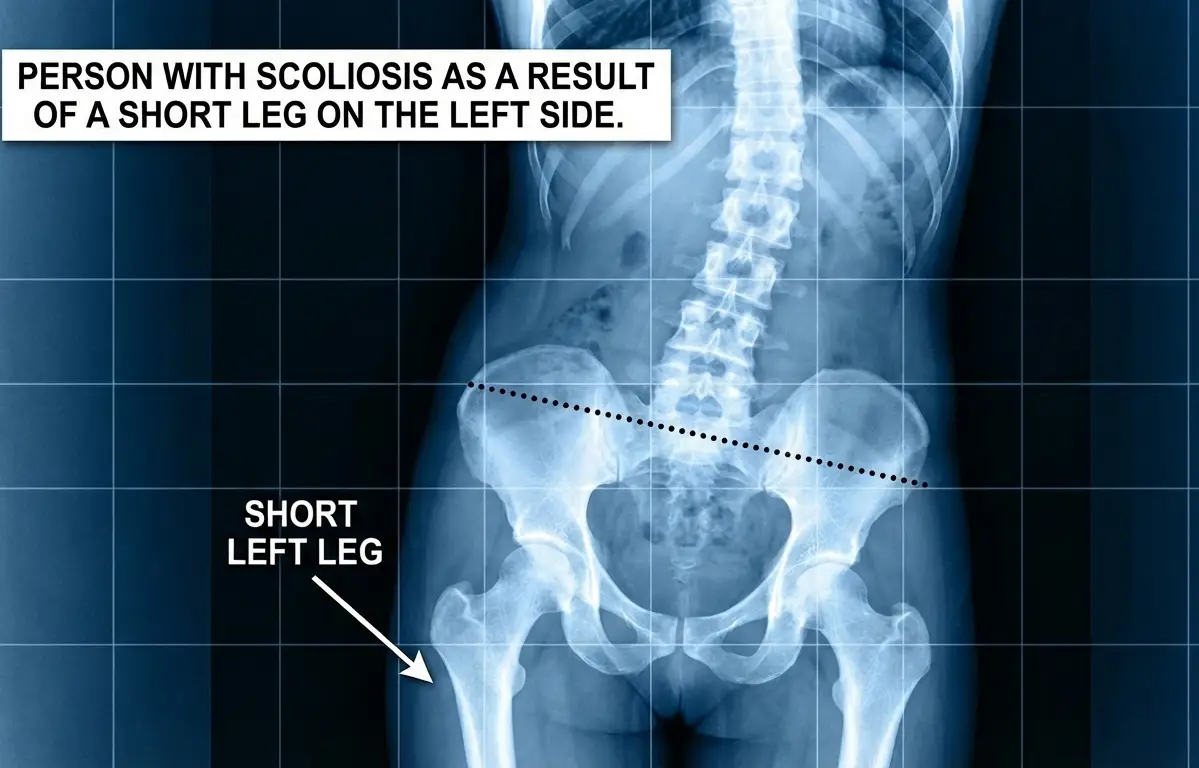
A left short leg or right short leg is one of the most overlooked contributors to chronic pain and postural imbalance, even though this small asymmetry can quietly influence the entire body from the ground up. Many people—and even some healthcare providers—assume that pain originates exactly where it’s felt, but that assumption is a major reason long‑standing muscle and joint issues never fully resolve.
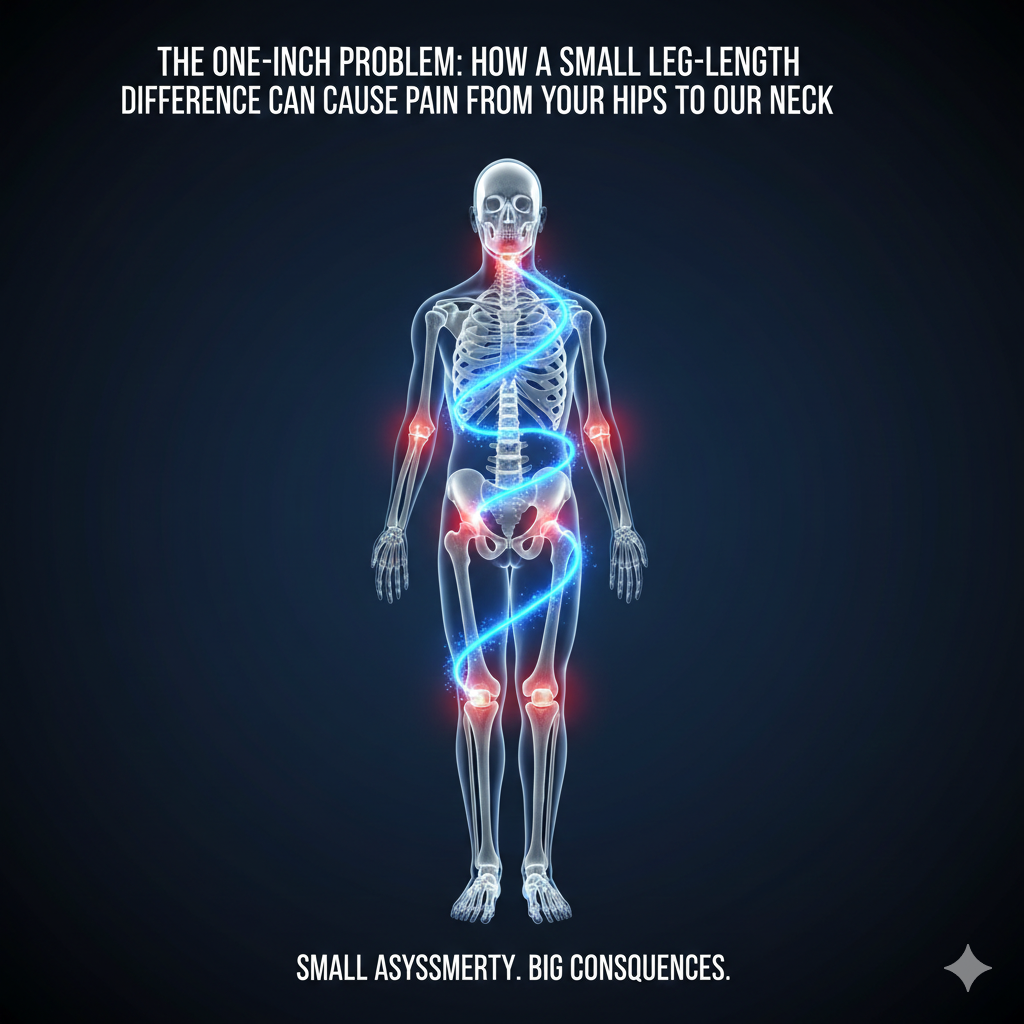
A left short leg—whether structural or functional—doesn’t have to be dramatic to disrupt the body. Even a one centimeter (half an inch) of difference can shift how you walk, stand, and stabilize yourself. When this asymmetry combines with pelvic rotation, the body begins a predictable cascade of compensations. Over time, these compensations create a recognizable pattern: tightness in the left hip, pain on the right side of the lower back, stiffness through the mid‑back, and tension in the right shoulder and neck. Although these symptoms seem unrelated, they’re all part of the same biomechanical story.
This guide breaks down how that chain reaction develops, how pelvic rotation influences posture, and what must be corrected to stop the cycle instead of endlessly treating symptoms.
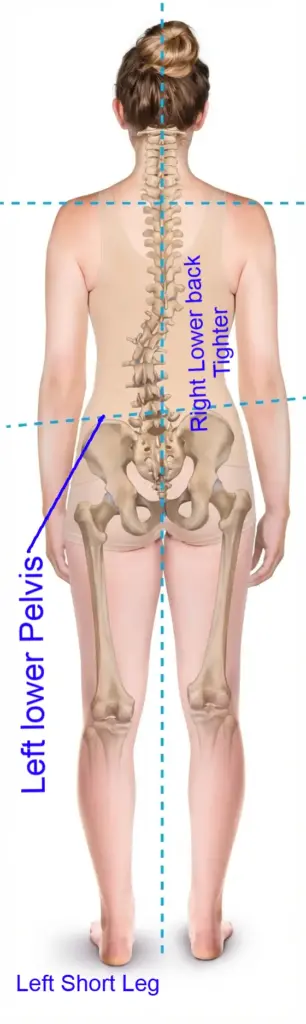
Small Leg-Length Difference, Major Body-Wide Effects
A left short leg doesn’t mean anything is “wrong” with the leg itself. It simply means your nervous system senses that one side of your body is lower. To keep your eyes level and your balance steady, your body makes adjustments—sometimes dozens of times a day.
The issue isn’t the compensation. The issue is living with that compensation for years.
When the left leg is shorter, the body often responds by:
- Lifting the left side of the pelvis
- Rotating the pelvis (left side forward, right side backward)
- Bending and rotating the lumbar spine
- Twisting the mid‑back in the opposite direction
- Tilting the head and neck to keep vision level
Pain appears only after the body exhausts its ability to adapt.
Some people even develop uneven eyes, where one eye sits slightly higher. The eyes aren’t the problem—the head and neck are tilting to counteract the twist happening below.
Structural Scoliosis How to Detect it in Your Child
The Pelvis Doesn’t Just Tilt—It Twists
Most people think of pelvic tilt as a simple forward‑or‑backward motion. But with a left short leg, the pelvis also rotates.
Common signs include:
- The left side of the pelvis rotating forward
- The right side rotating backward
- A leg‑length difference that changes depending on position
- Hip tightness that never improves with stretching
This rotation changes how each hip functions. One hip becomes the “bracer,” constantly stabilizing. The other becomes the “driver,” pushing the body forward. Neither hip moves the way it should.
Why the Left Hip Feels Tight (and Why Stretching Doesn’t Help)
People with a left short leg often complain that the left hip feels tight, pinched, or compressed. But the hip isn’t tight because it’s short—it’s tight because it’s overworking.
What’s happening:
- Deep stabilizing muscles tighten to hold the pelvis steady
- The hip loses healthy rotation under load
- The muscles stay partially contracted all day
Stretching may feel good temporarily, but it doesn’t fix the underlying pelvic mechanics.
Why the Right Side of the Lower Back Hurts
As the pelvis twists, the lumbar spine must bend and rotate to keep the body upright. This often leads to:
- Overactive muscles on the right side of the lower back
- Uneven pressure on spinal joints
- One side becoming stiff while the other side overworks
This is why people with a left short leg often feel pain on the right side of the lower back. Imaging may show “degeneration,” but it rarely explains why it’s asymmetrical.
The Mid‑Back and Rib Cage Join the Compensation Spiral
Once the lower back rotates, the mid‑back must twist the opposite way to keep the head facing forward.
This can create:
- Stiffness or discomfort on the left side of the mid‑back
- A rib cage that looks or feels uneven
- Difficulty extending the thoracic spine
At this stage, posture visibly changes. The spine is no longer stacked—it’s spiraling.
Neck and Shoulder Tension: The Final Link in the Chain
Your nervous system prioritizes vision and balance. If the pelvis and rib cage shift, the neck automatically adjusts.
Common results:
- A dominant right upper trapezius
- The neck rotating more easily to one side
- Forward head posture
- Persistent neck tension
Treating the neck alone rarely works because the neck is reacting—not initiating.
The Postural Domino Effect
Over time, the body develops recognizable patterns:
1. Anterior pelvic tilt and increased lumbar arch
The lower back over‑arches to stabilize the rotated pelvis.
2. Thoracic hyperkyphosis
The mid‑back rounds forward to counterbalance the lower‑back arch.
3. Dowager’s hump
A buildup of tissue at the base of the neck from long‑term forward head posture.
4. Forward head carriage
The head drifts in front of the shoulders, forcing the neck muscles to work overtime.
These aren’t the root problems—they’re the body’s solutions.
Is This Scoliosis?
Often, this pattern creates functional scoliosis, which:
- Changes depending on position
- Improves when sitting or lying down
- Comes from pelvic mechanics, not structural deformity
Calling it scoliosis without addressing the pelvis misses the true cause.
Why Walking Reinforces the Pattern
Every step strengthens the imbalance.
With a left short leg:
- You spend less time on the left leg
- The left heel lifts earlier
- The pelvis rotates the same way repeatedly
- Thousands of steps per day reinforce the pattern
Without correcting gait mechanics, treatment won’t hold.
One Exercise That Begins to Reset the System
To correct the problem, you must train the body as an integrated unit.
Asymmetric Split‑Stance Hip Load With Thoracic Reach
Goals:
- Restore pelvic alignment
- Reduce excessive lumbar arching
- Improve thoracic rotation and extension
- Decrease overuse of the upper traps
Key cues:
- Position the pelvis first
- Exhale to soften the lower‑back arch
- Keep ribs stacked over the pelvis
- Move slowly and deliberately
This exercise retrains the system rather than simply strengthening or stretching isolated muscles.
The Bottom Line
Your body isn’t malfunctioning—it’s adapting.
A left short leg and a rotated pelvis don’t cause pain immediately. Pain appears when the body runs out of compensation strategies. Long‑term relief comes from addressing the entire chain, not just the painful area.
When alignment improves and load is distributed evenly, the body finally has a chance to reset—and pain no longer needs to speak so loudly.
If this pattern sounds familiar, the next step isn’t more stretching or random exercises. It’s a comprehensive, whole‑body assessment that respects how the body actually works.
Tell us what you think in the comments below and like us on Facebook. This Toronto Downtown Chiropractor will answer all questions in the comments section.
Please follow and like us:
Dr. Ken, has been recognized as the Best Toronto Chiropractor in 2024, 2023, and 2018, here in downtown Toronto. As a sports chiropractor, he excels in treating a wide range of conditions including concussions, temporomandibular joint disorders (TMJ), sports-related injuries, and spinal issues. Beyond his clinical skills, Dr. Ken is an accomplished athlete, having represented Ontario in the Canadian Judo Championships and completed the Toronto Marathon on two occasions. He employs the innovative C3 Program to provide targeted and effective care to his patients, ensuring a holistic approach to their well-being and athletic performance.