Bodi Empowerment
Concussion Recovery: A Sports Chiropractor’s Guide for Safe Return to Play
Please follow and like us:


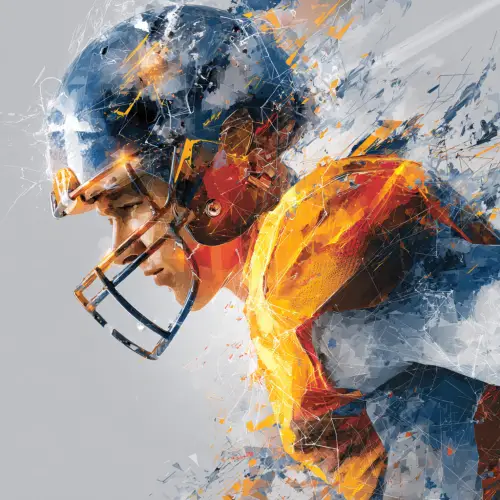
A concussion is more than a bump to the head. It is a brain injury that needs careful testing, a clear plan, and the right treatment. As a Certified Chiropractic Sports Practitioner (CCSP), my goal is simple: safe and steady concussion recovery so athletes can return to school, work, and sport with confidence.
If you are looking for a concussion chiropractor in Toronto, this is the framework I use in my clinic.
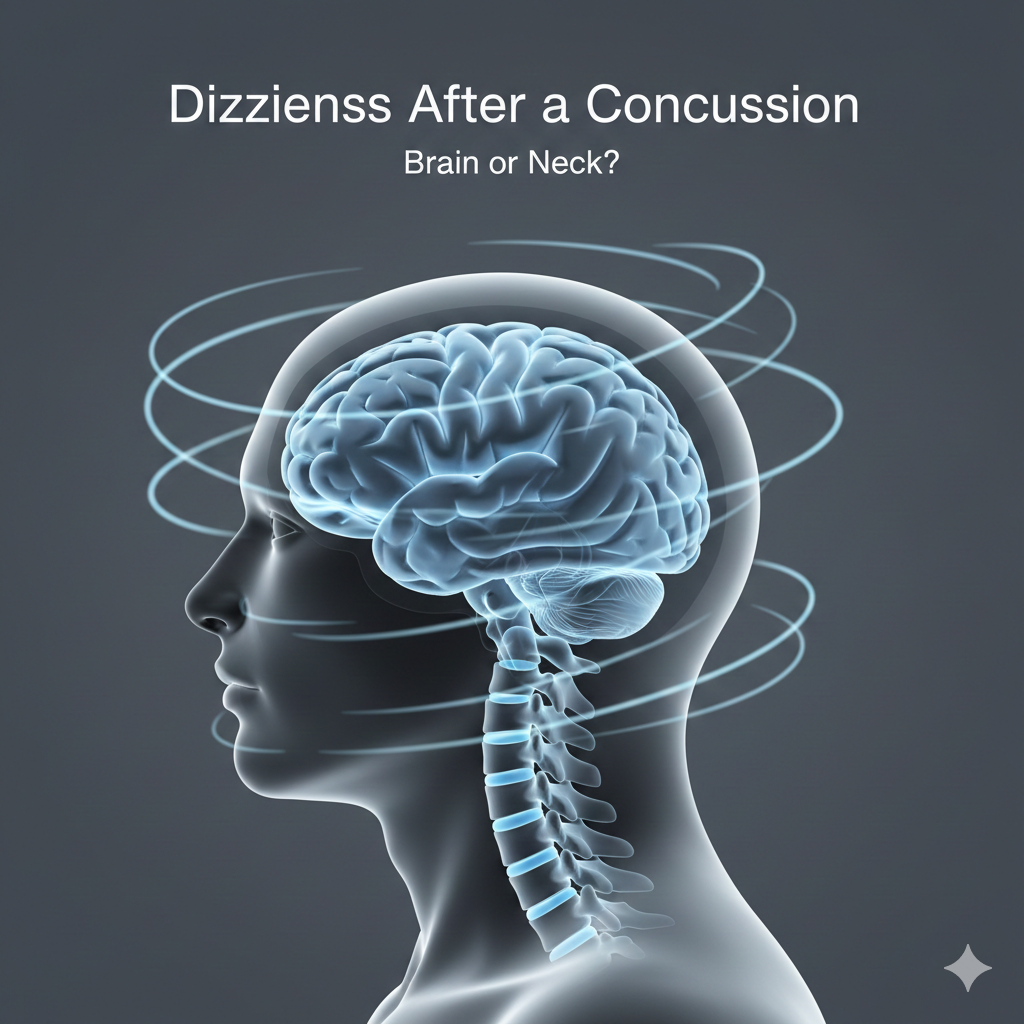
Why Dizziness After a Concussion May Come From Your Brain, Your Neck — or Both
1. Understanding How the Injury Happened
Recovery starts with knowing what caused the concussion. It may come from:
- A hit to the head
- Whiplash
- A fast twist or rotation
- A sports collision or fall not involving the head, where the forces can be transferred to the head.
Rotational forces and whiplash often create neck problems that can feel like concussion symptoms. We study the injury carefully so nothing is missed.
2. Checking for Red Flags
Some signs mean you should go to the emergency room right away. These include:
- Worsening headache
- Repeated vomiting
- Slurred speech
- Confusion
- Uneven pupils
- Signs of a skull fracture
Safety always comes first.
3. Concussion or Neck Injury?
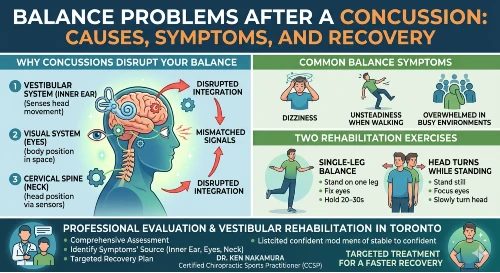
Many “concussion” symptoms actually come from the cervical spine (the neck). Neck problems can cause:
- Headaches
- Dizziness
- Brain fog
- Vision trouble
- Nausea
- Stiffness
We test neck movement, joint control, and symptom changes with different positions. If symptoms change with neck testing, the neck is part of the problem—and the treatment plan changes.
4. Testing Vision and Balance Systems
A concussion can disrupt how your eyes, ears, and brain work together. We assess:
- Smooth eye movement
- Quick eye movement
- Vestibulo-ocular reflex (VOR)
- Balance
- Gait
If these systems are not working well, people feel dizzy, tired, or “off.” Targeted rehab helps restore normal function.
Best Concussion Treatment Options
5. Checking the Autonomic Nervous System
After a concussion, many people notice:
- Higher resting heart rate
- Trouble with exercise
- Fatigue
- Anxiety
- Poor sleep
We use graded exercise testing to find a safe heart rate zone. Research shows that light aerobic activity helps concussion recovery more than full rest.
6. Building a Personalized Treatment Plan
Every concussion is different. Treatment may include:
- Manual therapy for the neck
- Soft tissue work
- Vestibular rehab
- Eye movement exercises
- Graded aerobic exercise
- TMJ assessment if needed
We reassess often and adjust the plan as you improve.
7. Step-by-Step Return to Play
Returning too soon can delay recovery. A safe return-to-play plan includes:
- Light daily activity
- Light aerobic exercise
- Sport-specific movement
- Non-contact drills
- Full-contact practice
- Return to competition
You move to the next step only when you are symptom-free.
Why Choose a Sports Chiropractor?
As a downtown Toronto chiropractor with advanced sports training, I combine:
- Biomechanics
- Cervical spine care
- Neuromuscular rehab
- Athletic performance knowledge
Concussion recovery needs structure—not just rest.
When to Get Checked
You should seek assessment if you have:
- Headaches after impact
- Dizziness
- Brain fog
- Light sensitivity
- Neck pain
- Symptoms lasting more than 7–10 days
Early care often leads to faster recovery.
The Goal
The goal of concussion recovery is:
- Full brain function
- Healthy neck movement
- Safe return to sport
- Confidence in performance
If you are looking for a concussion chiropractor in Toronto, choose someone who looks at the whole system—brain, neck, vision, and movement
Tell us what you think in the comments below and like us on Facebook. This Toronto Downtown Chiropractor will answer all questions in the comments section.
Estimated reading time: 3 minutes
Please follow and like us:
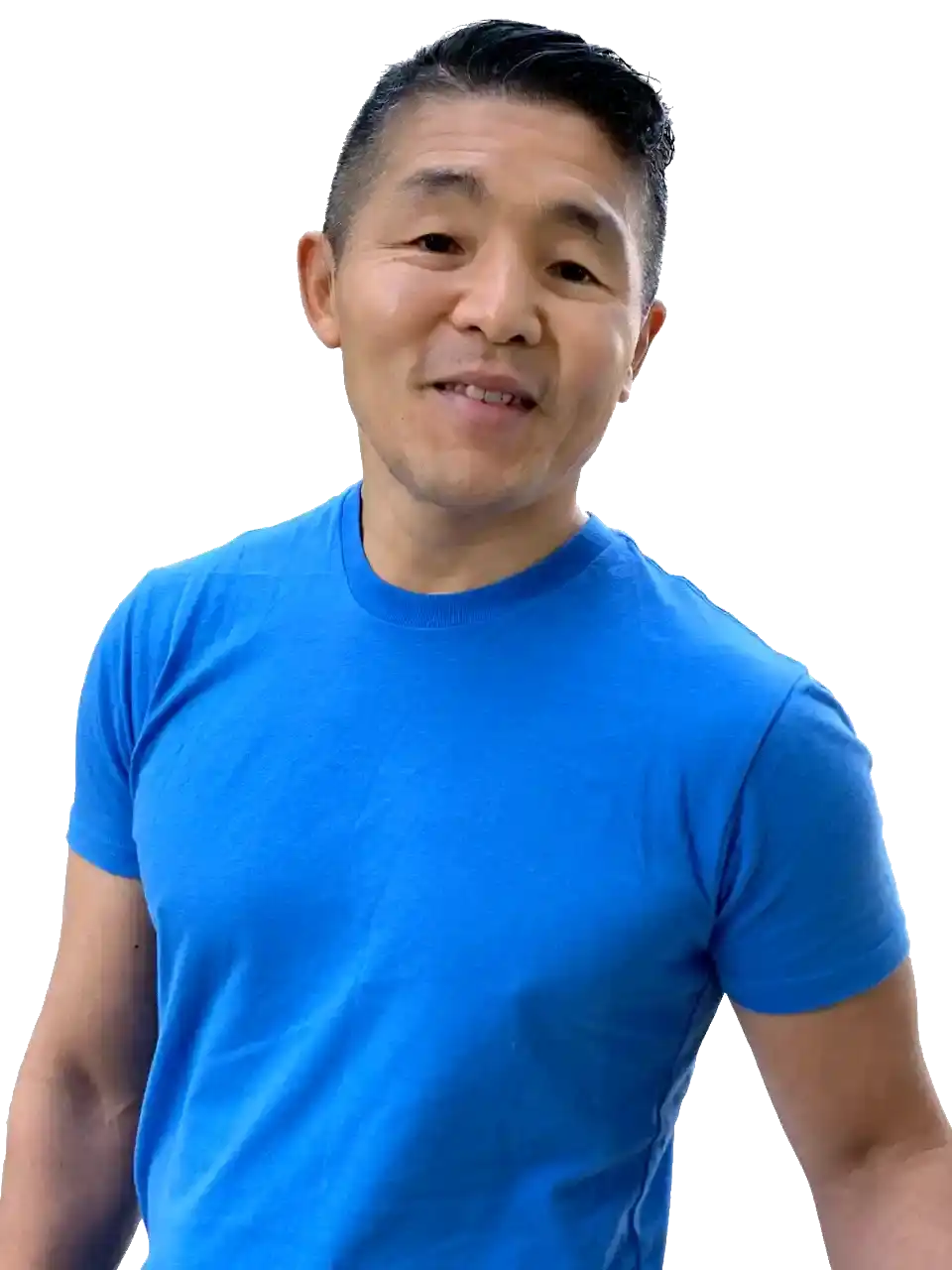
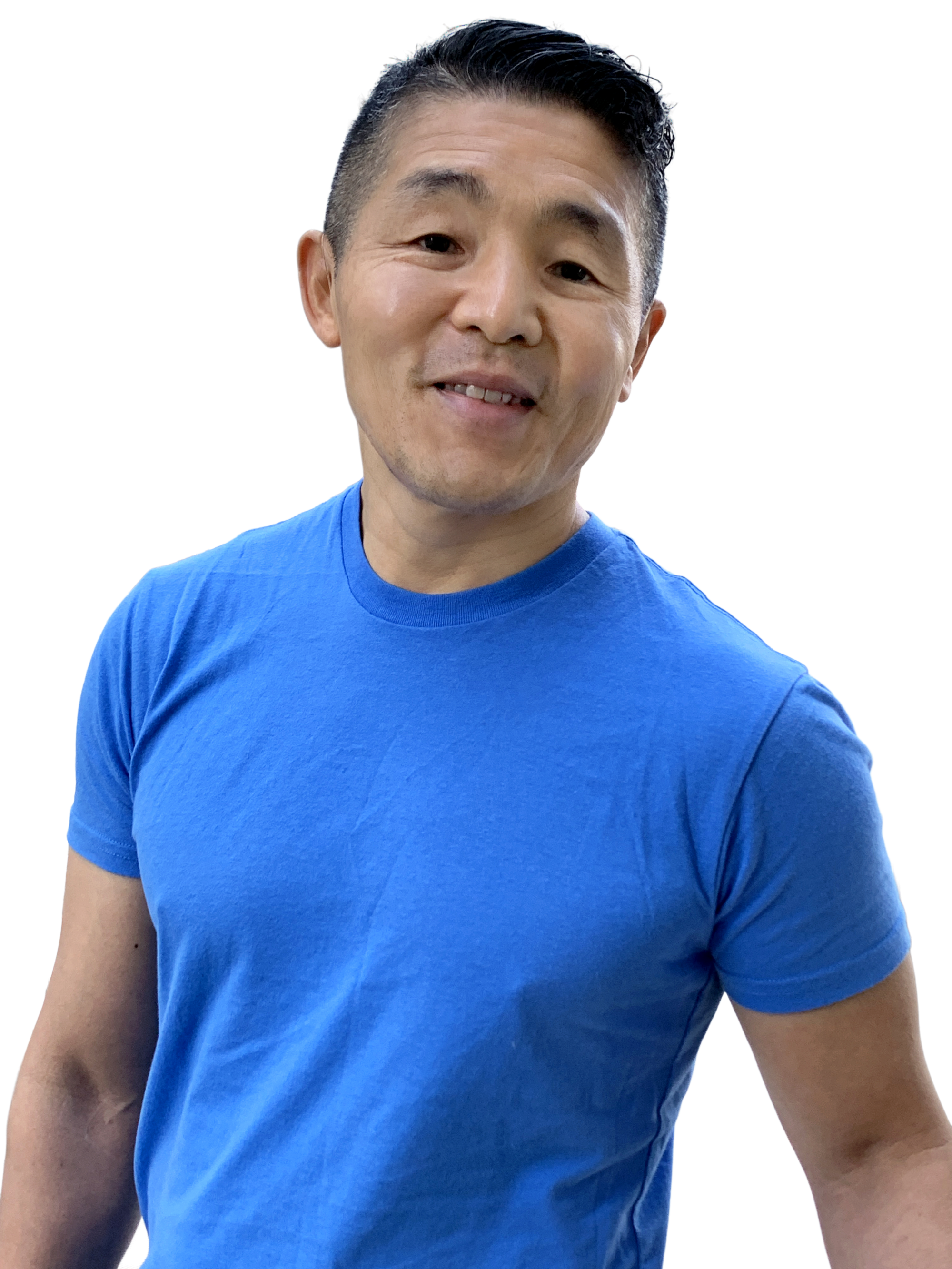
Dr. Ken, has been recognized as the Best Toronto Chiropractor in 2024, 2023, and 2018, here in downtown Toronto. As a sports chiropractor, he excels in treating a wide range of conditions including concussions, temporomandibular joint disorders (TMJ), sports-related injuries, and spinal issues. Beyond his clinical skills, Dr. Ken is an accomplished athlete, having represented Ontario in the Canadian Judo Championships and completed the Toronto Marathon on two occasions. He employs the innovative C3 Program to provide targeted and effective care to his patients, ensuring a holistic approach to their well-being and athletic performance.