Bodi Empowerment
Ultimate Guide to Exercises for Lumbar Herniated Disc Relief 2
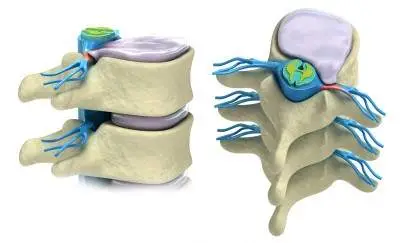
Please follow and like us:


Did you find our previous article, “Disc Herniation Part 1,” helpful but are still battling discomfort? Are you eager to discover exercises that can effectively reposition your herniated disc and enhance your well-being? You’re in the right place.
In this comprehensive guide, we’ll cover:
- Effective Exercises for Repositioning a Herniated Disc: Learn the top movements to gently coax your disc back into alignment, reducing pain and improving mobility.
- Stabilization Techniques to Prevent Disc Displacement: Discover exercises that strengthen your core and back, ensuring your discs stay in place.
Understanding Lumbar Disc Herniation:
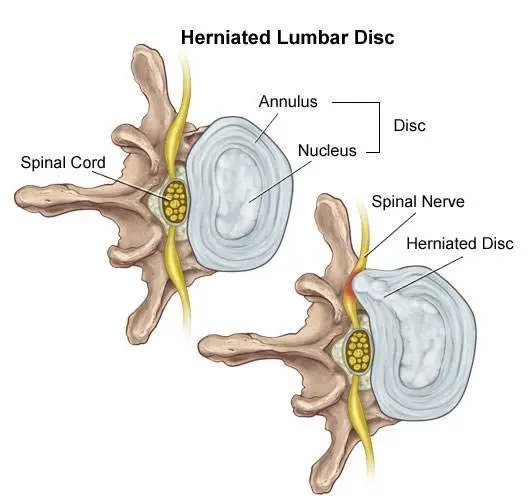
A herniated disc occurs when the disc’s nucleus breaks through the annulus, as shown in the illustration from neurosciences.beaumont.edu. But what triggers this displacement? The primary culprit is forward bending, which compresses the disc (think of it as a jelly-filled doughnut) and can lead to the annulus fracturing, allowing the nucleus to protrude and press against nerves.
Why Does it Hurt?
The disc’s exterior is tough cartilage, while its interior is softer, akin to mucus. Applying pressure on one side forces the inner material to the opposite side, similar to squeezing a doughnut. When a herniated disc or inflammation puts pressure on a nerve, pain ensues. The key to relief is applying counterpressure to reposition the disc.
For a deeper dive into herniated discs, refer to “Disc Herniation Part 1: Best Self-Treatments for Lumbar Disc Herniation.“
How to Apply Counterpressure:
The strategy involves bending your spine backwards or into the extension to shift the disc away from the nerve.
Exercises to Reposition a Herniated Disc: Note of Caution:
Initially, these exercises might intensify your pain slightly. If pain significantly worsens or radiates further down your leg during these exercises, cease immediately and consult a professional.
Exercises for Lumbar Herniated Disc
#1 Prone Lying Lumbar Herniated Disc
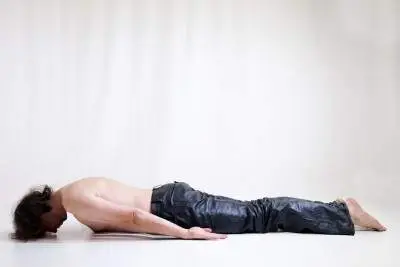
- Lie face down or prone in bed with your elbows tucked in under your side:
- As soon as you get up in the morning you should lie prone (face down). By getting in this position, your lower back becomes more arched, or as doctors say, you increase your lordosis.
- The increased lordosis pushes on the back of the disc helping to bring the nucleus forward into the correct position.
#2 Sphinx pose in Yoga For Lumbar Herniated Disc
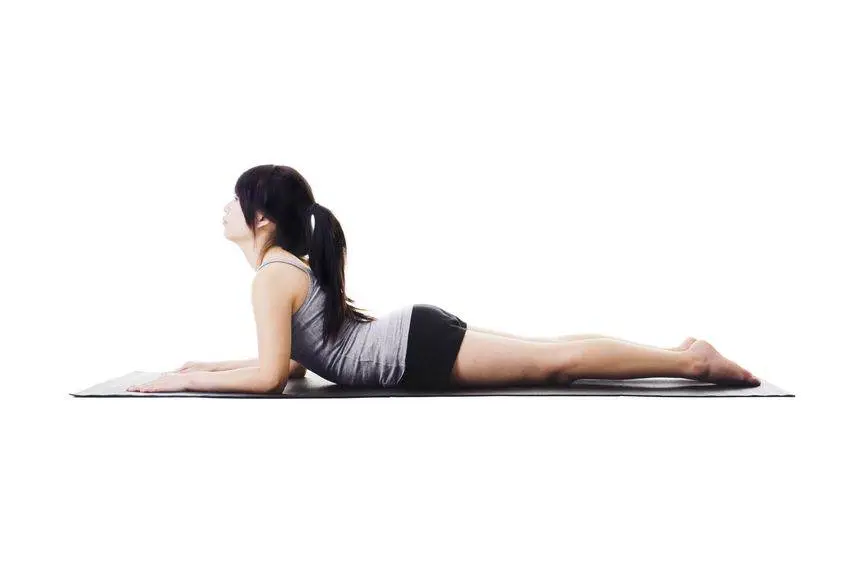
- Get into the prone position lying down on your stomach.
- Next, get on your elbows. If you have a hard time with this position go back into the prone lying position.
- Do these exercises hold each time for 1-2 seconds 6-8 times per set? This exercise can be repeated every two hours throughout the day.
Asses yourself. If the pain has decreased or the pain has moved away from the leg or thigh and into the hip or buttock, this is an improvement. Even if the pain is increased in the back but relieved in the leg this is an improvement and a green light that you should continue this exercise. You also get a green light if there is no difference at all.
- If your self-assessment gives you the green light, move on to the Cobra exercises just below.
- If your thigh or leg pain is worse, then stop right away.
- If your lower back, thighs and legs are the same you get a green light, so move on to the Cobra exercises.
#3 Cobras For Lumbar Herniated Disc
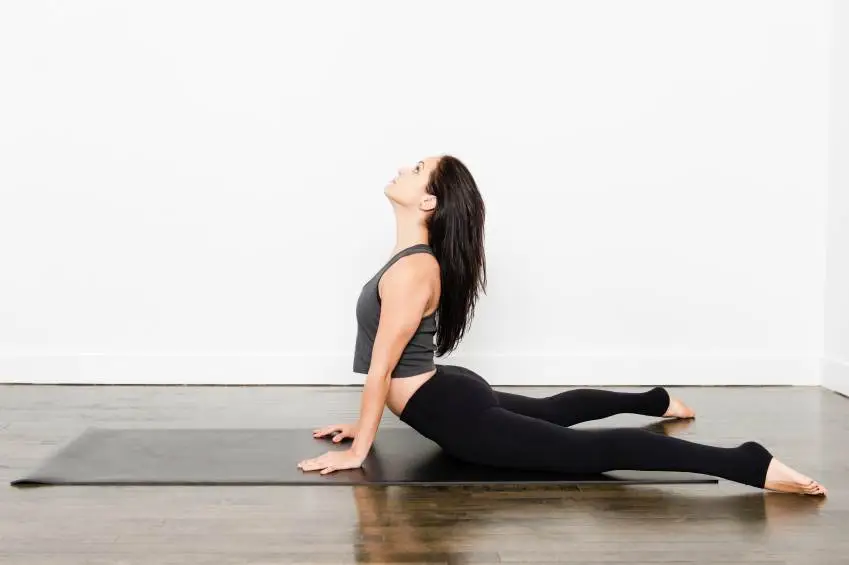
- Lie down face down with your hands underneath your shoulders.
- Push up from as high as you can until your lower back stops you or your elbows are straight.
- The pelvis should still be on the floor and the lower back muscles relaxed.
- Do these exercises hold each time for 1-2 seconds 6-8 times per set? This exercise can be repeated every two hours throughout the day.
Asses yourself. If the pain has decreased or the pain has moved away from the leg or thigh and into the hip or buttock, this is an improvement. Even if the pain is increased in the back but relieved in the leg this is an improvement and a green light that you should continue this exercise. If your thigh or leg pain is worse, then stop right away.
#4 Standing Extensions Lumbar Herniated Disc
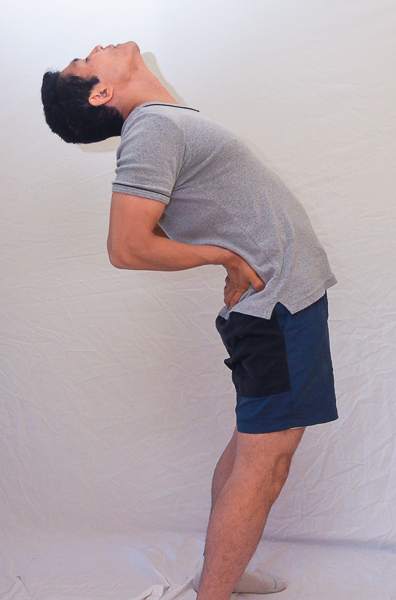
- Stand straight and put your hands behind your hips with your fingers facing down.
- Push your hands into your pelvis so that your lower back arches.
- Don’t use your lower back muscles
- These exercises can be done 6-8 times for 1-2 seconds. This exercise can be repeated every two hours throughout the day.
Stabilization Exercises: Prevent Your Disc From Coming Out By Having A Stable Spine.
#1 Cat-Camel or Cat-Camel For Herniated Disc
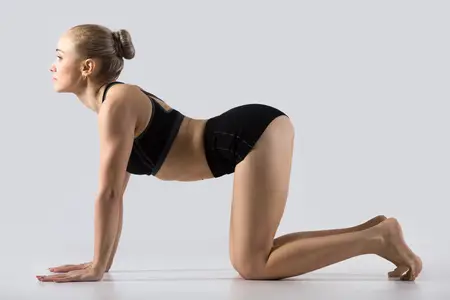
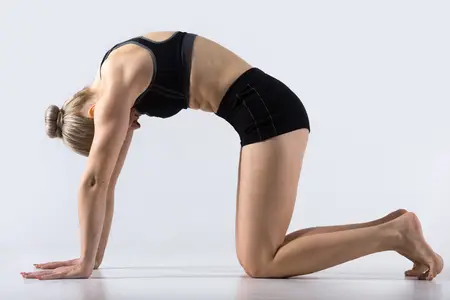
- On all fours with your knees under your hips and hands under your shoulders.
- Inhale and let your belly fall downwards toward the floor as you look up toward the ceiling for 2 seconds.
- Exhale and arch your back up as far as it will go or until you feel pain. You should not feel pain with this exercise, otherwise you are going too high.
- At the same time bend your neck forward and look toward your navel.
#2 Curl-Ups
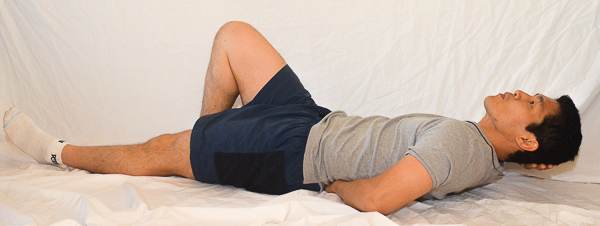
- To start, one foot is bent and the other is straight.
- One forearm goes under the arch of your lower back to support it.
- The other arm is supporting your head.
- Your head and neck come up as one block until your shoulder blades clear the floor.
- Do three sets of 5 working your way up to 10. If it’s easy, then hold for a couple of breaths.
#3 Squats
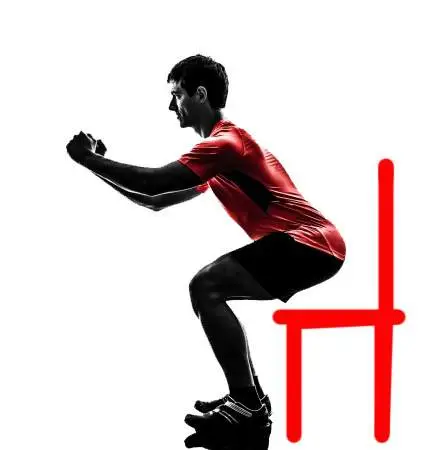
- Stand in front of a chair as if you are going to sit on it.
- Stand with your feet facing slightly more outward than your knee.
- Make sure your butt comes out, and keep lowering your butt until you touch the chair.
- Practice 3 sets of 10.
#4 Bird Dog
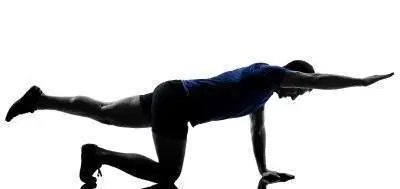
- Get into a crawling position with your hands and feet shoulder-width apart.
- Harden your core by contracting your abs and lower back. This is called bracing.
- Lift your arm first. If this is easy, then lift your leg only. If that is easy, then lift the opposite legs and arms, for example, right leg, and left arm.
- Want to make it tougher? Try lifting an arm and leg on the same side.
- 3 sets of 10. If you are shaking a little or cannot balance quite right, you’re doing the right exercise for you, i.e. lifting just the leg or arm might be easy, but lifting opposite arms and legs might put you off-balance a bit. Make sure you are stable before going to the advanced bird dog.
Tell us what you think in the comments below and like us on Facebook. This Toronto Downtown Chiropractor will answer all questions in the comments section. Let us know your vote for the best Toronto chiropractor in the comments section.
References
1. J Med Genet 2002;39:387-390 doi:10.1136/jmg.39.6.387
Please follow and like us:


Dr. Ken, has been recognized as the Best Toronto Chiropractor in 2024, 2023, and 2018, here in downtown Toronto. As a sports chiropractor, he excels in treating a wide range of conditions including concussions, temporomandibular joint disorders (TMJ), sports-related injuries, and spinal issues. Beyond his clinical skills, Dr. Ken is an accomplished athlete, having represented Ontario in the Canadian Judo Championships and completed the Toronto Marathon on two occasions. He employs the innovative C3 Program to provide targeted and effective care to his patients, ensuring a holistic approach to their well-being and athletic performance.