Bodi Empowerment
Managing Disc Herniation and Alleviating Sciatica: Tips and Tricks 1
Please follow and like us:


Suffering from disc herniation? Experiencing sharp pains shooting through your buttock, thigh, and leg due to sciatica? If your daily routine is disrupted by the discomfort of disc herniation, there’s hope. Many people find relief without needing surgery. This post will guide you through lifestyle changes to support your recovery from disc herniation. Stay tuned for our next piece, where we’ll explore exercises to correct and stabilize your condition.
Ultimate Guide To Exercises For Lumbar Disc Herniation Relief
Mary’s Story: A Wake-Up Call
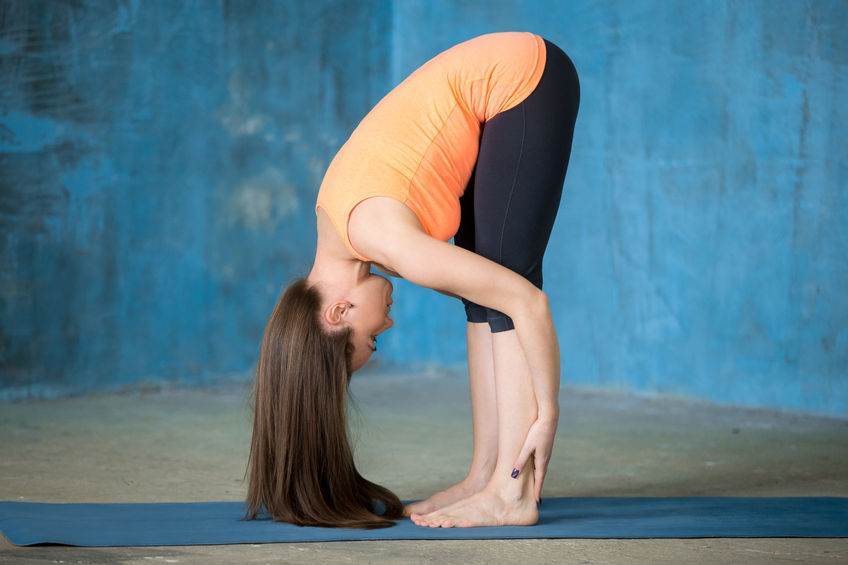
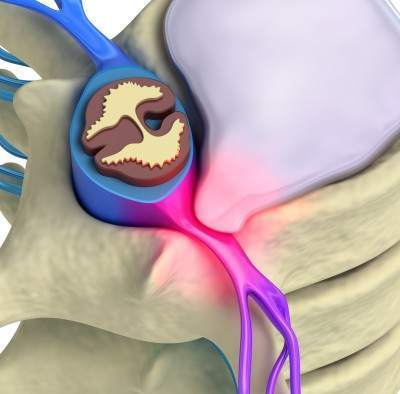
Imagine starting your day like any other, performing your routine toe touches, when suddenly you’re hit with an excruciating pain radiating from your lower back down to your toes. This was Mary’s reality when she encountered a lumbar disc herniation, commonly referred to as a slipped or ruptured disc. Such incidents can lead to what’s known as sciatica or radiculopathy, terms doctors use to describe the pain that extends down your leg.
Understanding Lumbar Disc Herniation:
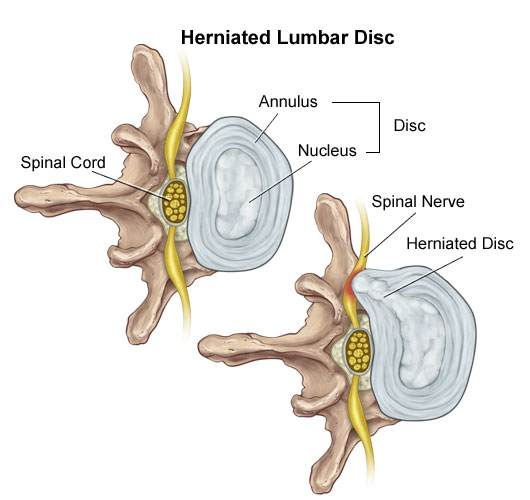
A glimpse into the anatomy of a herniated disc reveals two main components: the tough outer annulus and the softer, inner nucleus. Dr. Stuart McGill likens the nucleus to sticky phlegm. When Mary bent forward, it was akin to squeezing the front of a jelly doughnut, pushing the inner material backwards and eventually causing the disc to bulge and press on a nerve.
The Culprit Behind the Pain:
Mary’s disc herniation wasn’t a sudden mishap but the result of years of repetitive motions like toe touching and prolonged slouching at her desk. These habits gradually weakened her disc, leading to the moment when it finally herniated and impacted her nerve. The lack of nerves within the disc itself means significant damage can occur without immediate pain, explaining why the problem might not be felt until it’s severe.
A Lesson Learned:
The story underscores the importance of posture and the dangers of neglecting spinal health. While the advice to “sit up straight” might seem simplistic, maintaining the natural curve of your back is crucial. Mary’s experience serves as a potent reminder of the long-term consequences of poor posture.
Disc herniations don’t have to dictate your life. By understanding the causes and adopting preventive measures, you can manage and alleviate your symptoms.
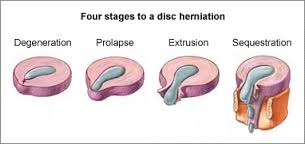
Understanding Disc Herniation: Pain, Prevention, and Care
The Unseen Progression of Disc Herniation (see picture above)
- Bulging Disc: Early stages where the disc starts to protrude due to wear and tear.
- Prolapsed Disc: The disc bulges more as it degenerates, but the nucleus remains contained.
- Extruded Disc: The protective layers give way, pressing on nerves and causing pain.
- Sequestrated Disc: The most severe stage, where disc fragments break away, potentially compressing nerves or the spinal cord.
See Also: MRI, CT scan and X-rays: Is an MRI, CT Scan or X-ray Best For My Pain?
Why Me? The Role of Movement and Genetics in Disc Herniations
Surprisingly, your daily habits and genetic makeup play pivotal roles in disc health. While we can’t choose our genetics, modifying daily movements can significantly reduce the risk of herniation. Proper lifting techniques and posture adjustments are crucial first steps.
Simple Changes, Major Impacts: Daily Habits and Exercise
To protect your spine:
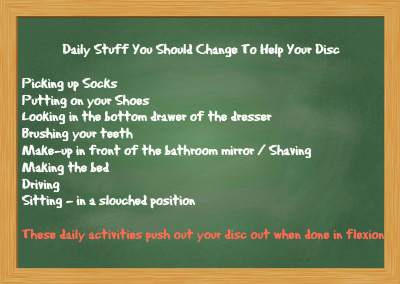
- Adjust Daily Habits: Learn to perform everyday activities in spine-friendly ways to prevent further disc damage.
- Disc-Specific Exercises: Exercises can help reposition the herniated disc.
- Stabilization Routines: Strengthening your core helps maintain spinal integrity, preventing future herniations.
Lifting Techniques: How Weight Lifters Should Lift
Master the Basic Butt-Lifting Technique for Disc Health
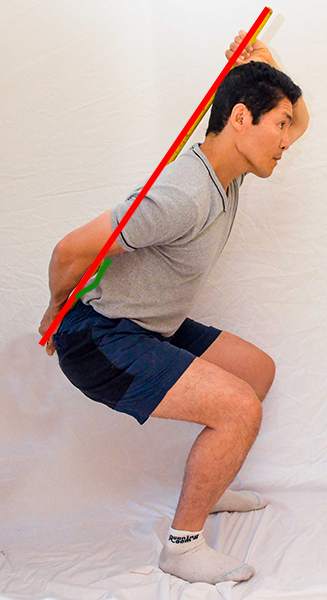
- Practice with a long, straight object to ensure your back remains aligned.
- Ensure it touches your butt, mid-back, and the back of your head during the entire motion.
- Squat down and maintain contact with 3 areas and keep the lower back arched the whole time.
- Aim for 30 repetitions to embed this healthy habit into your daily routine for 10 days
Daily Activity Guide: Protecting Your Discs
Then you integrate this lifting technique into everyday life. Initially, whenever you do any of these activities, use the same basic move and you will stop pushing out your disc.
In the beginning, you will need to be conscious each time you are doing any of these activities. To speed things up you can practice each activity like picking up your socks 30 times using the butt lifting technique and it will become even more automatic. You can deepen muscle memory during all of these activities.
For sitting in a chair and driving I recommend that you roll up a Mckenzie Lumbar support roll and put that in the arch of your lower back
Guide for disc herniation daily activities.
- Remember to do all these movements pain-free. Always stop whenever you run into pain with any movement of the spine.
- Disc herniations are linked with long periods of sitting, especially prolonged driving.
- Disc herniations are caused by repeated flexion.
- Prolonged trunk flexion or twisted or bend sideways cause disc herniations.
- Too much lifting, pushing/pulling causes disc herniations
- Vibration while sitting is linked to disc herniations.
- After prolonged stooping or sitting, you should stand. For example, a gardener lifting bags of peat moss after having a prolonged period of rounded lower back, or a driver getting heavy loads out of the trunk after a long drive is not recommended. You should remember to stand for a few minutes before attempting to lift. Studies have shown that ½ hour is even better.
Here are some more exercises that can cause disc herniation.
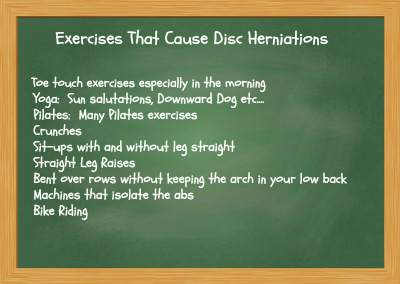
Activities That Put Out Lumbar Disc Herniations
Yes, it’s very surprising that toe touches, Yoga and certain Pilates can cause disc pressure leading to disc herniations. I have personally treated dozens of Yoga teachers with varying degrees of experience. The fact is some of the exercises involved in Yoga are great for helping disc herniations while others directly push the disc out.
Many Yoga Exercises Put Out Disc Herniations
I know many Yogis who have had to stop many of their exercises due to the pain it cause them in various parts of the body, including their disc.
Next week’s article will go over the second and third ways to help your disc. Remember, you need to do #1 “Daily Disc Activities Correctly” first so that your disc doesn’t keep getting aggravated. Then you can move on to next week’s article which goes over #2 Disc Exercises to Push the Disc Back In and #3 Stabilization Exercises help by keeping the disc from coming out by normalizing how your spine moves.
Looking Ahead: Comprehensive Care for Disc Health
Next week, we delve deeper into specific exercises for disc realignment and stabilization techniques, in this article called Ultimate Guide To Exercises For Lumbar Disc Herniation Relief. Remember, starting with correct daily activities is essential to prevent aggravating your condition further.
Tell us what you think in the comments below and like us on Facebook. This Toronto Downtown Chiropractor will answer all questions in the comments section.
Please follow and like us:


Dr. Ken, has been recognized as the Best Toronto Chiropractor in 2024, 2023, and 2018, here in downtown Toronto. As a sports chiropractor, he excels in treating a wide range of conditions including concussions, temporomandibular joint disorders (TMJ), sports-related injuries, and spinal issues. Beyond his clinical skills, Dr. Ken is an accomplished athlete, having represented Ontario in the Canadian Judo Championships and completed the Toronto Marathon on two occasions. He employs the innovative C3 Program to provide targeted and effective care to his patients, ensuring a holistic approach to their well-being and athletic performance.